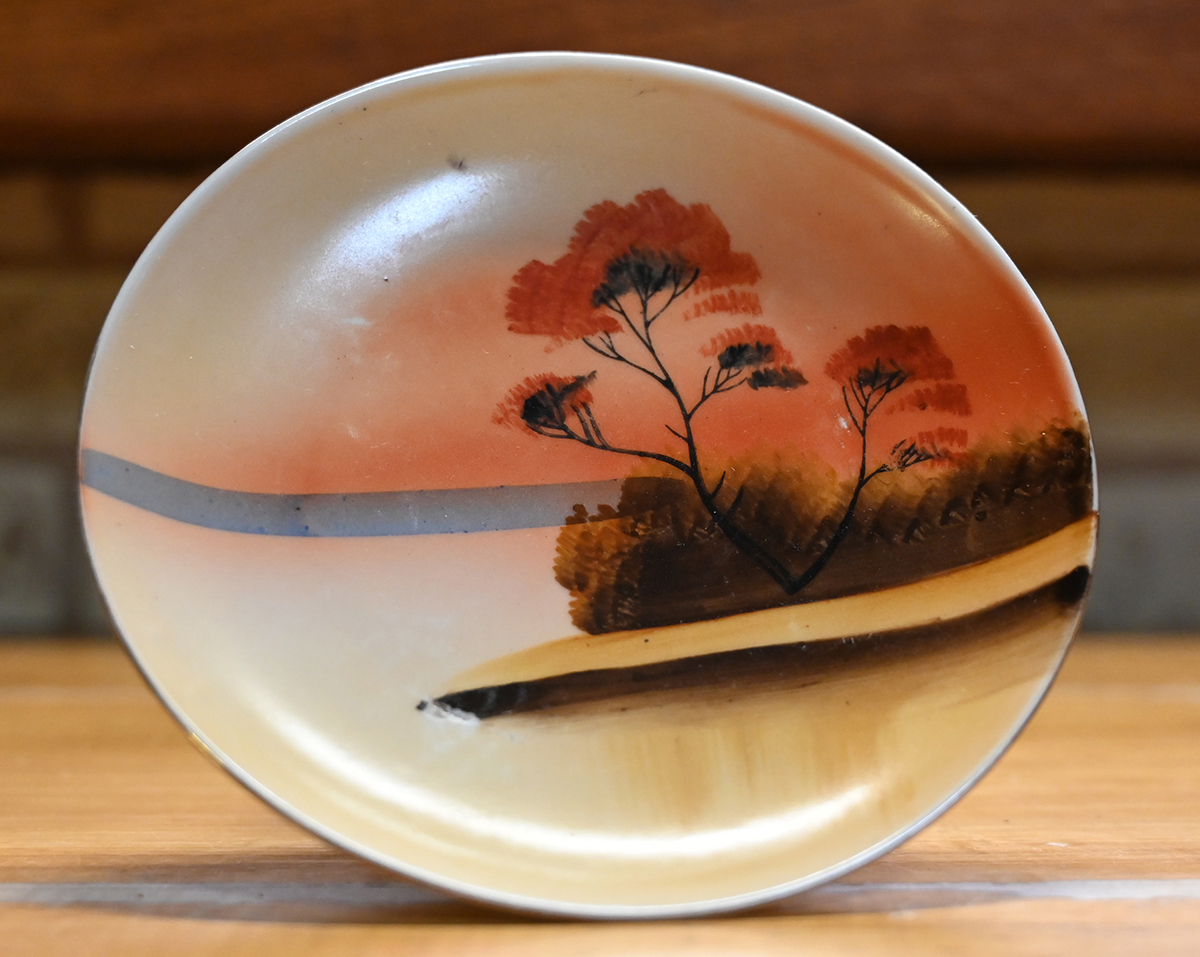
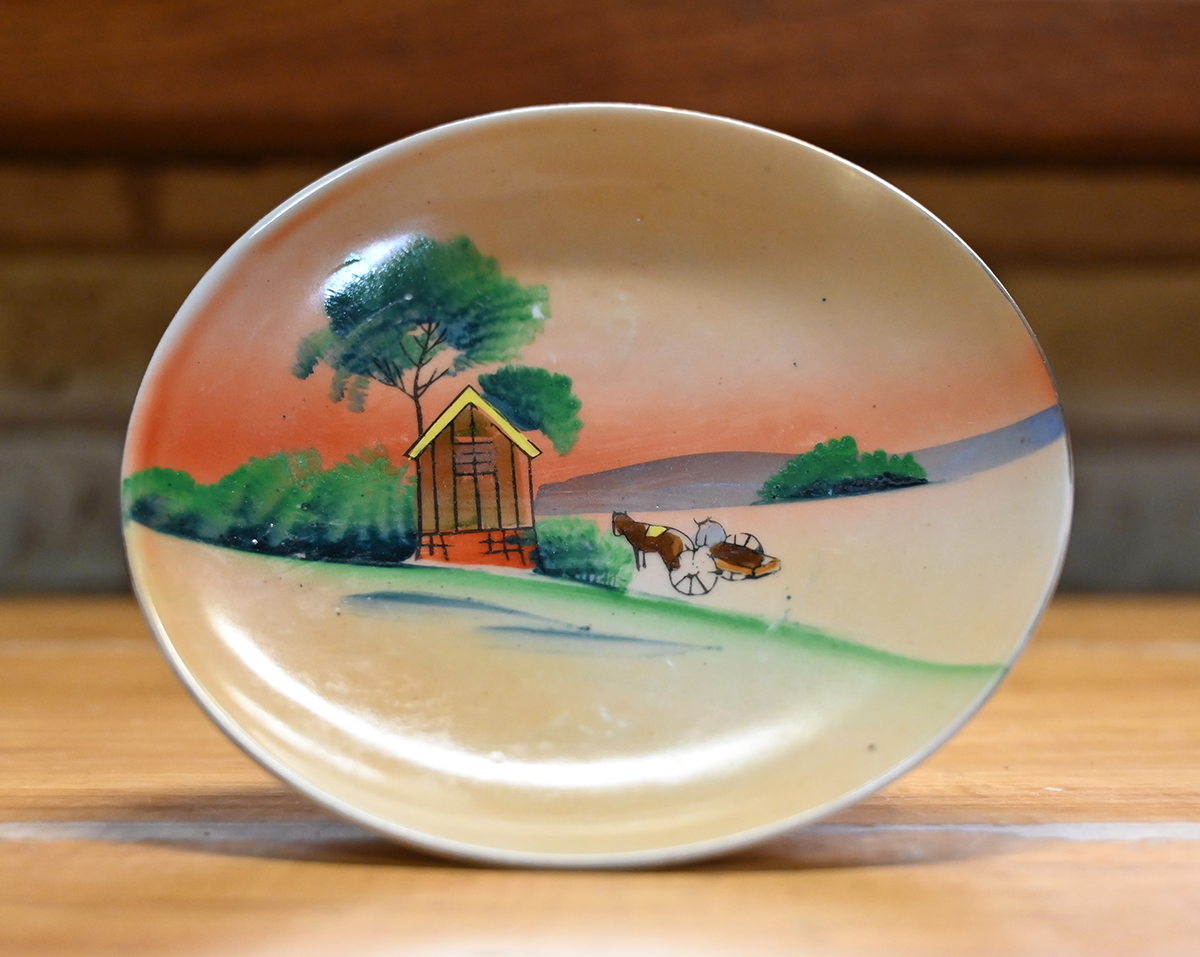
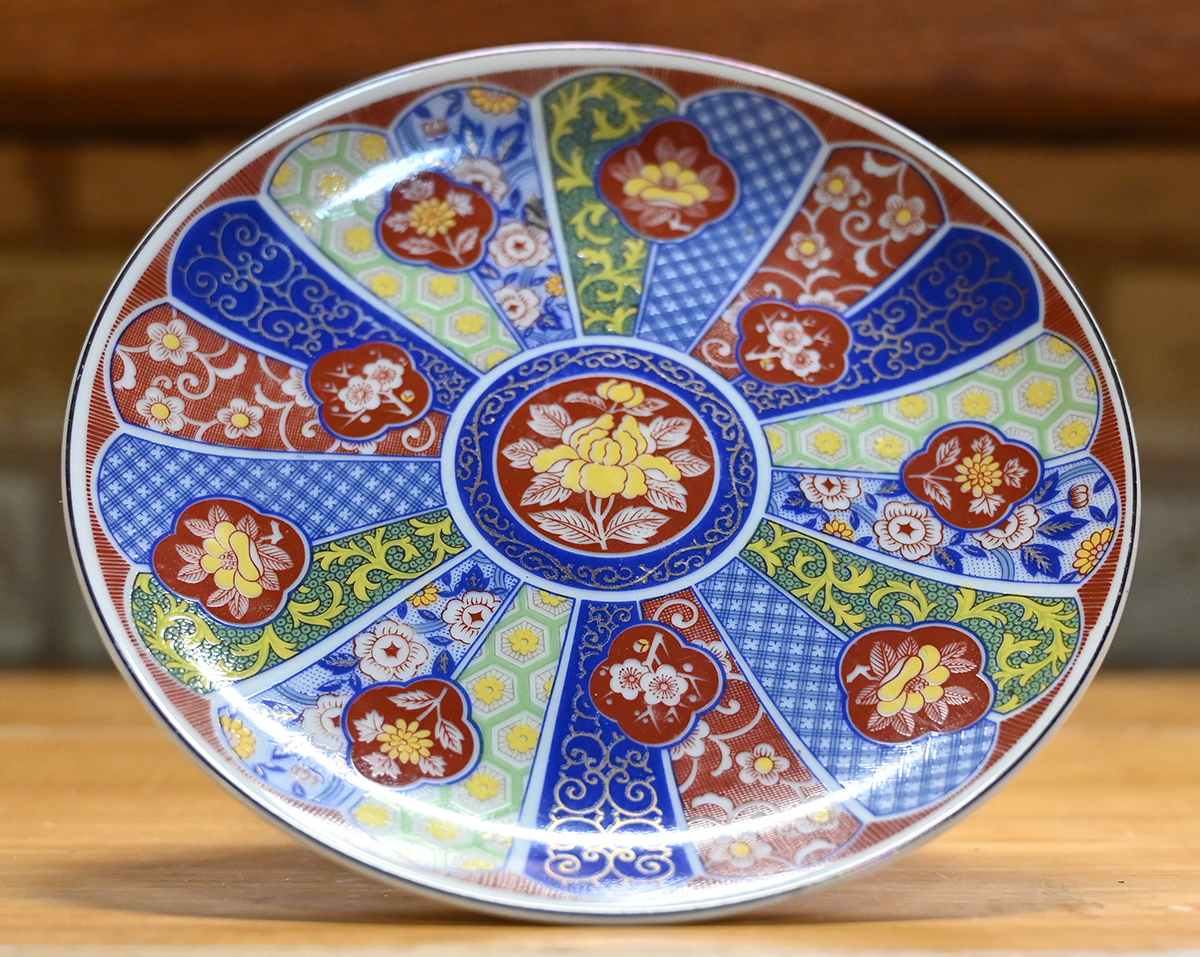
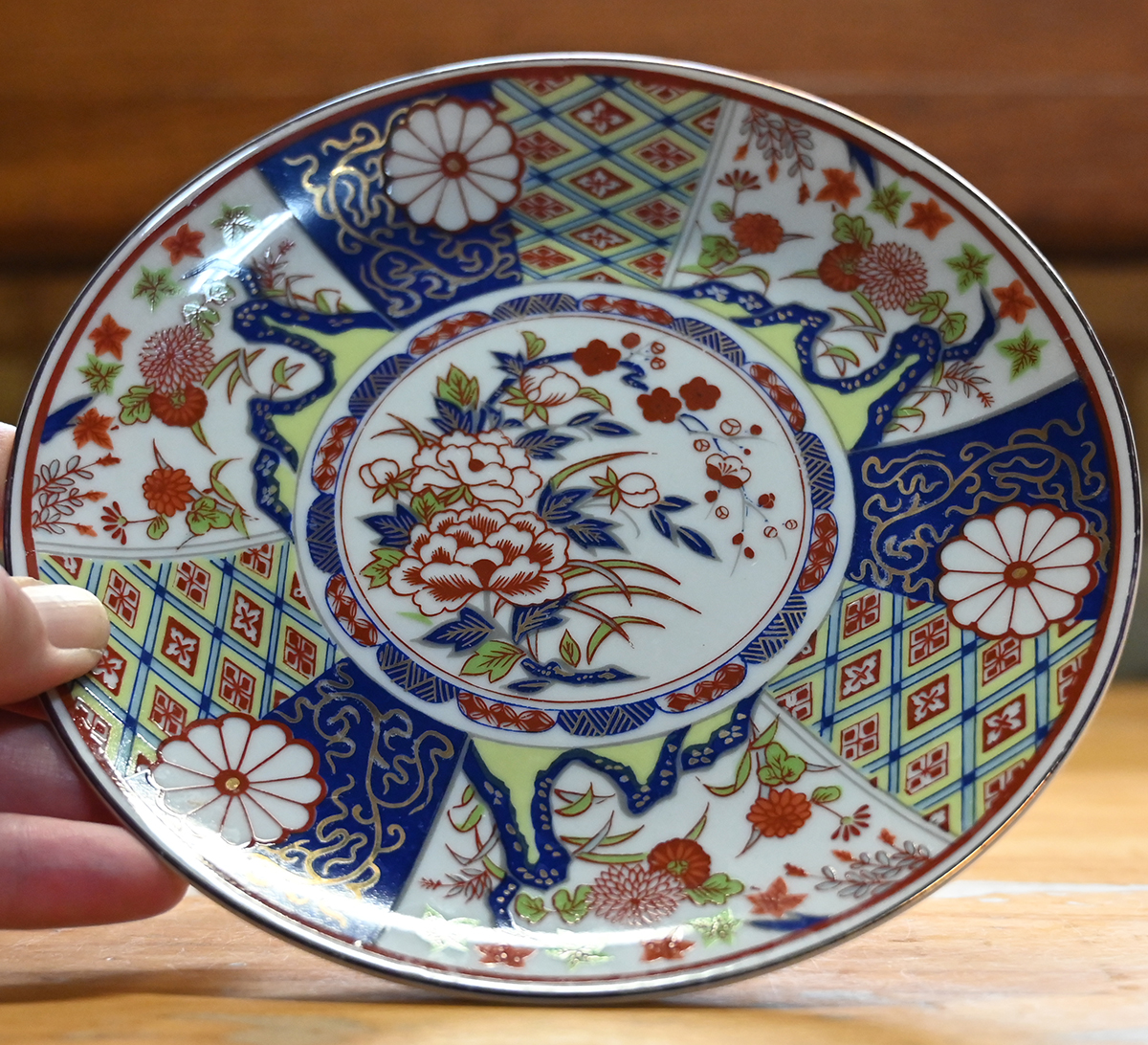
Japanese Takayama bamboo tea whisk (chasen), probably kazuho type, made by the Wahokudō–Tanimura Tango workshop, Nara Prefecture, Japan, in its original paper-covered box.Japanese Takayama bamboo tea whisk (chasen), probably kazuho type, made by the Wahokudō–Tanimura Tango workshop, Nara Prefecture, Japan, in its original paper-covered box.Japanese export ware, possibly from the early-to-mid 20th century.Japanese export ware, possibly from the early-to-mid 20th century.Japanese Imari-style porcelain, mid- to late-20th-century Japanese export ware.Japanese Imari-style porcelain, mid- to late-20th-century Japanese export ware.Set of six Japanese porcelain yunomi-style tea cups with turquoise bamboo and gold decoration, probably mid-20th century.
The tea whisk and the porcelain tea cups were gifts from the student who stayed with us in the spring of 1976, Misako Kamata, from Odawara, Japan. The cups came in a wood box, simple and utilitarian, which seemed so elegant to me that I repurposed it as a jewelry box. It’s in the center of the back of the bedroom dresser, next to the bed.
There is also a tea bowl, part of the original set. It’s lightly chipped, about the size of an ordinary soup bowl but taller, has (as I recall) a purple decorative ring around it. Looks less obviously Japanese.–Missy was studying traditional tea ceremony. She said she was not very good at it, but that it pleased her father. She demonstrated it for us once. Very hot water was poured into the tea bowl, then a fine powdered green tea, what Missy called “Zen tea” was whisked around in it, then poured into the tea cups. All while kneeling, slowly,reflectively, with a lot of little gestures, bowing, turning the bowls one way or the other, taking time. And, obviously, traditionally performed while wearing a kimono, not Grey Eagle High-appropriate garb.
We have a lot of gifts from Missy. I’ll make a separate inventory of what and where they are. Her family also sent her food parcels, so we made our first acquaintance with ramen noodles in Japanese packs with Japanese lettering. The Japanese ramen is better, I think.
The other plates were something we picked up at a farm auction. I’m guessing they were probably a souvenir from a returning GI, after either WWII or Korea.
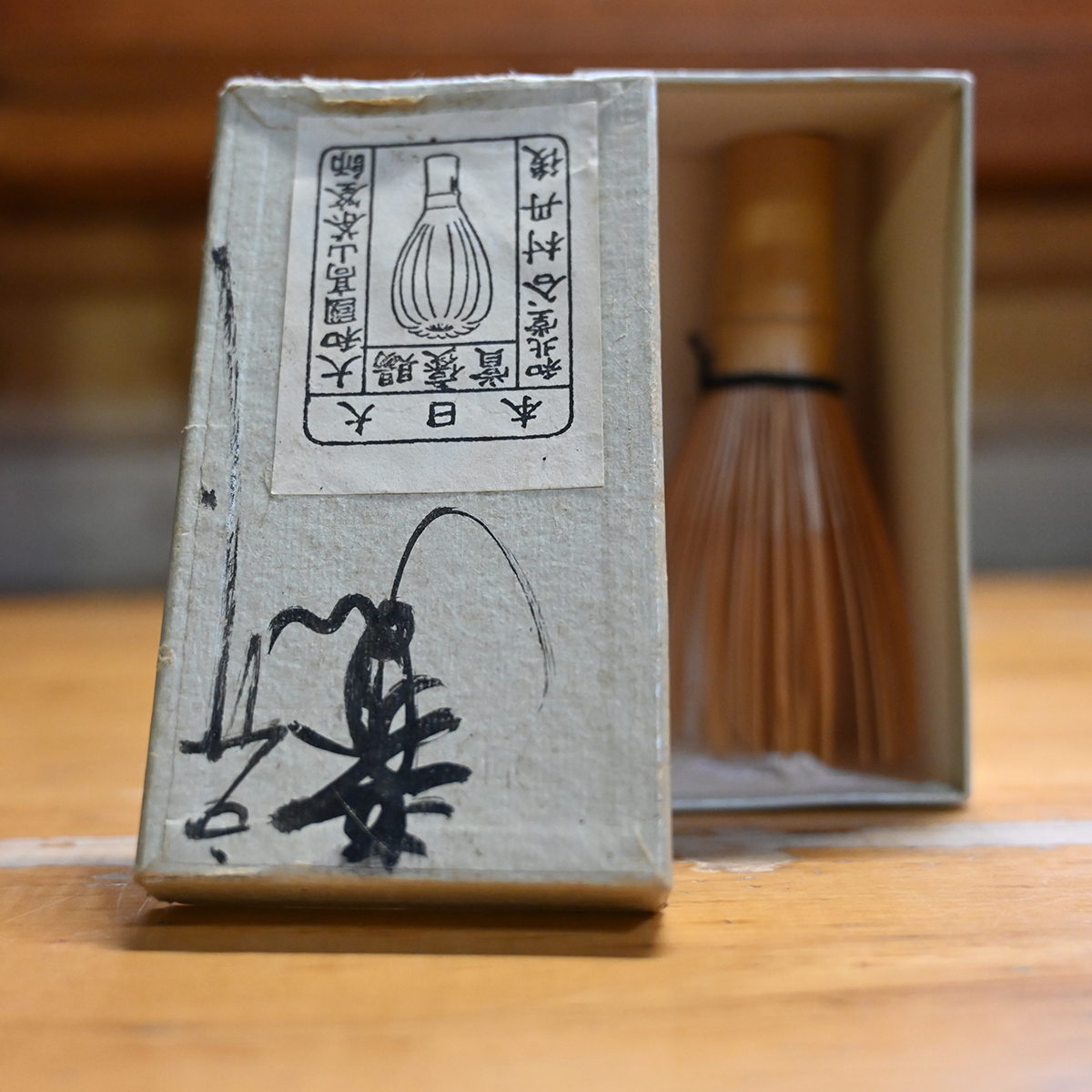
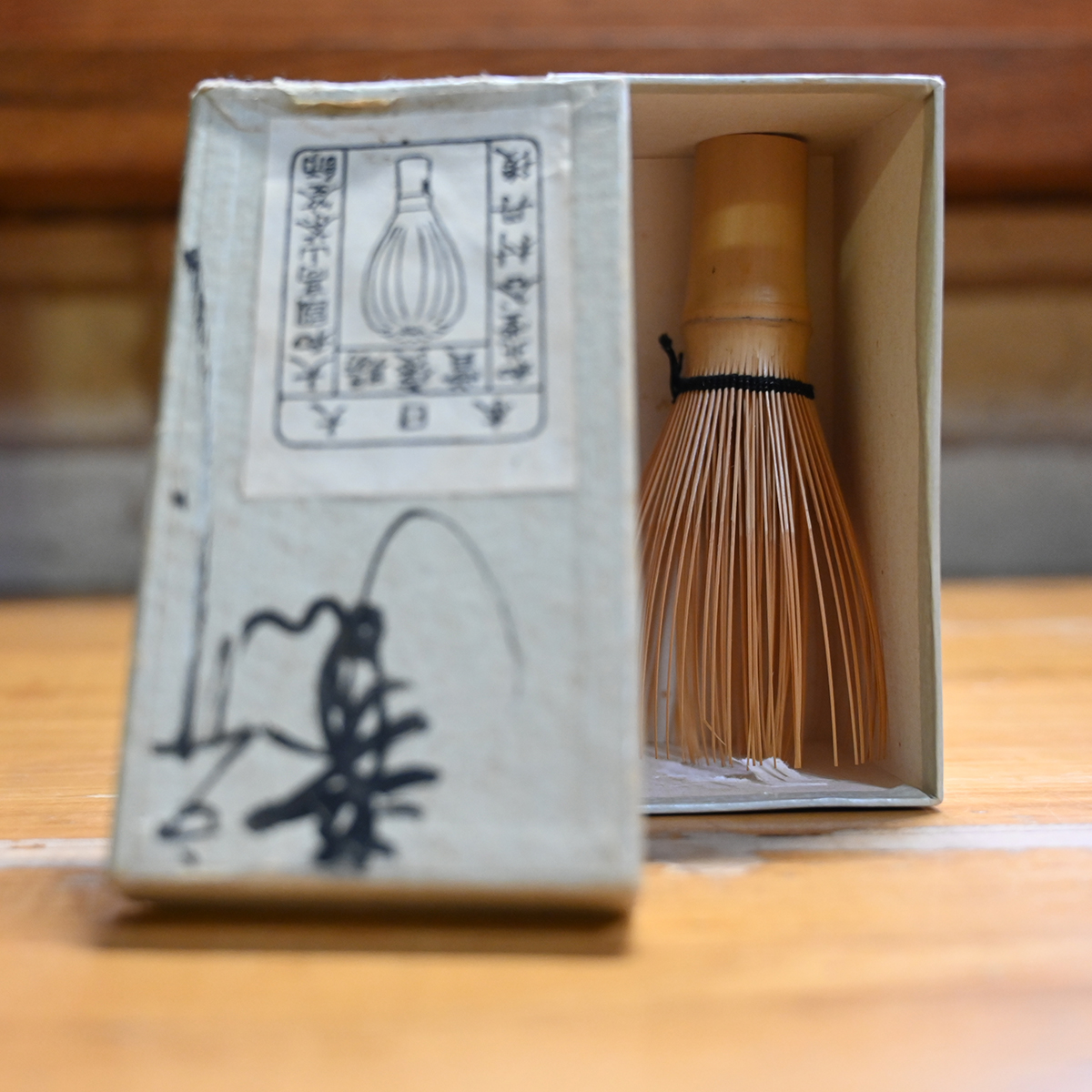
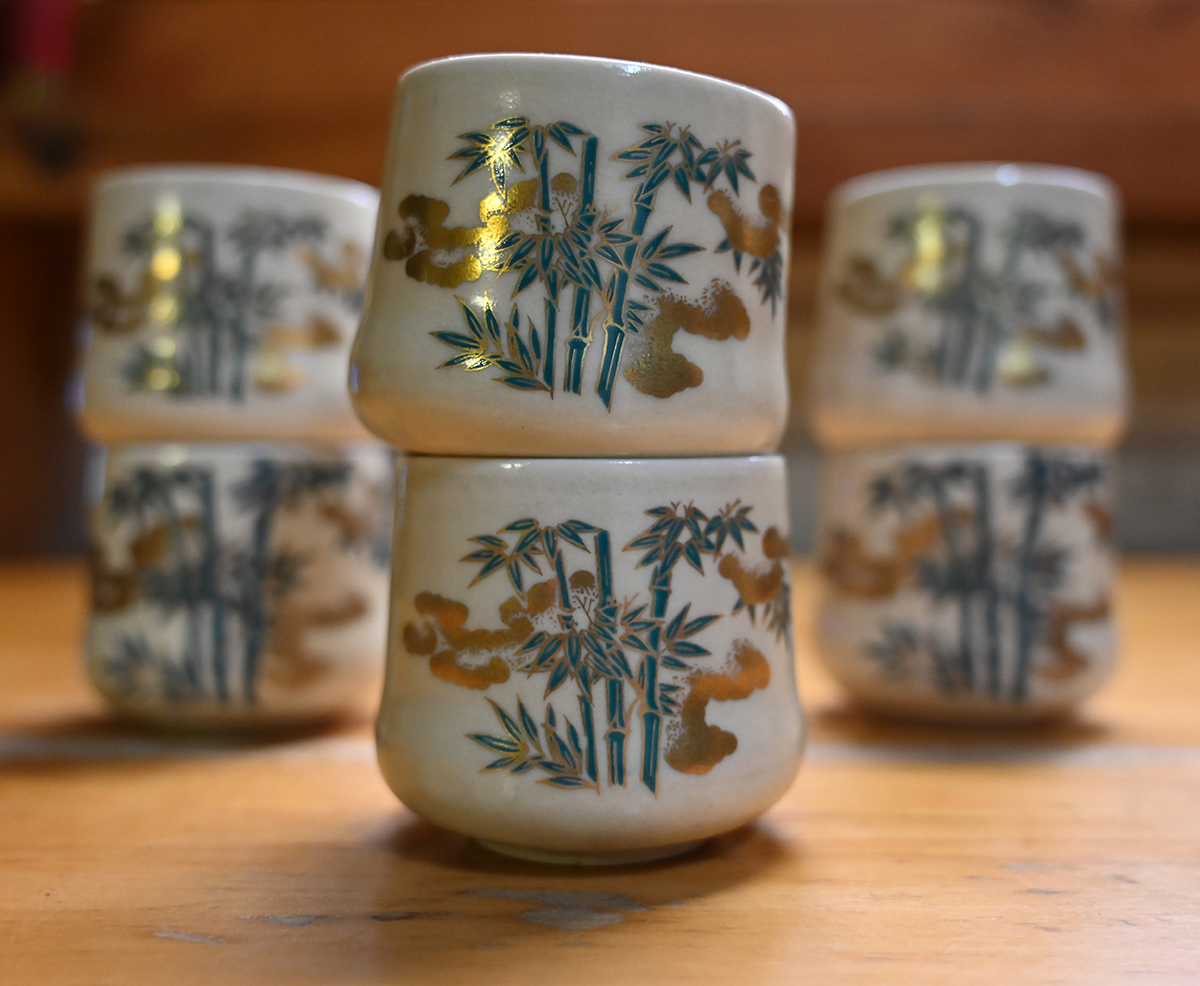
The tea whisk and the porcelain tea cups were gifts from the student who stayed with us in the spring of 1976, Misako Kamata, from Odawara, Japan. The cups came in a wood box, simple and utilitarian, which seemed so elegant to me that I repurposed it as a jewelry box. It’s in the center of the back of the bedroom dresser, next to the bed.
There is also a tea bowl, part of the original set. It’s lightly chipped, about the size of an ordinary soup bowl but taller, has (as I recall) a purple decorative ring around it. Looks less obviously Japanese.–Missy was studying traditional tea ceremony. She said she was not very good at it, but that it pleased her father. She demonstrated it for us once. Very hot water was poured into the tea bowl, then a fine powdered green tea, what Missy called “Zen tea” was whisked around in it, then poured into the tea cups. All while kneeling, slowly,reflectively, with a lot of little gestures, bowing, turning the bowls one way or the other, taking time. And, obviously, traditionally performed while wearing a kimono, not Grey Eagle High-appropriate garb.
We have a lot of gifts from Missy. I’ll make a separate inventory of what and where they are. Her family also sent her food parcels, so we made our first acquaintance with ramen noodles in Japanese packs with Japanese lettering. The Japanese ramen is better, I think.
The other plates were something we picked up at a farm auction. I’m guessing they were probably a souvenir from a returning GI, after either WWII or Korea.